

[Nov 21, 2025] Fully Updated SAP Certified Associate (C_THR88_2505) Certification Sample Questions
Latest SAP C_THR88_2505 Real Exam Dumps PDF
SAP C_THR88_2505 Exam Syllabus Topics:
| Topic | Details |
|---|---|
| Topic 1 |
|
| Topic 2 |
|
| Topic 3 |
|
| Topic 4 |
|
| Topic 5 |
|
NEW QUESTION # 15
Your customer wants its users to be able to launch e-learning modules in a blended item even if the users are not enrolled in a scheduled offering for the item. In the user settings, what setting satisfies this requirement?
Please choose the correct answer.
- A. Default self -registration setting for new item
- B. Allow users to access online content without registration
- C. Prevent user scheduling conflicts.
- D. Allow self-registration to proceed as long as the prerequisites will be completed prior to the scheduled start date.
Answer: D
NEW QUESTION # 16
Your customer wants some of its users to be able to view an intranet web site from the SuccessFactors Learning system. What can you use to accommodate this requirement? Note: There are 3 correct answers to this question.
- A. Custom Tile with a Link
- B. Direct Link Tool
- C. A Recommended Collection
- D. Easy Links
- E. Quick Link Configuration
Answer: B,D,E
NEW QUESTION # 17
Which fields are required in the data file when importing users into SAP SuccessFactors Learning from the SAP SuccessFactors HCM Platform?
Note: There are 2 correct answers to this question.
- A. JP_ID (Job code)
- B. LNAME (Last name)
- C. STUD_ID (User ID)
- D. NOTACTIVE (Status)
Answer: C,D
NEW QUESTION # 18
Your customer wants to enable employees to create their own accounts in SuccessFactors Learning. Where do administrators define the settings for the mandatory and optional fields display to the employee?
- A. In Record Configuration
- B. In System Configuration/LMS_ADMIN
- C. In Search Selectors
- D. In User-Created Account
Answer: A
NEW QUESTION # 19
A customer wants a scheduled offering to allow self-registration.
In addition to selecting the Self Registration option on the Scheduled Offering, what else needs to be done?
Note: There are 2 correct answers to this question.
- A. The class must be in a library that managers/approvers can view.
- B. The Self Registration checkbox must be selected on the Item entity.
- C. The registration cutoff date must be in the future.
- D. The class must be in a library that users can see.
Answer: B,D
NEW QUESTION # 20
What type of questions can you add when creating an item evaluation survey? Note: There are 2 correct answers to this question.
- A. Rating Scale - user chooses a rating scale
- B. Matching - user chooses a matching value or answer from opposing valu
- C. One Choice - user chooses one correct answer from a list
- D. Hot Spot - user chooses a particular area of an image
Answer: A,C
NEW QUESTION # 21
Why would you edit the SEARCH properties file in System Configuration instead of the individual search selectors? Note: There are 3 correct answers to this question.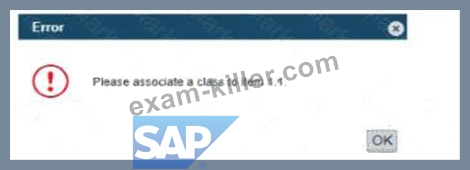
- A. To display all rows for the search results
- B. To permit users to search for Jam groups
- C. To set the number of rows per page for the search results
- D. To enable dropdowns instead of searches
- E. To set the default search operator to Starts with instead of Contains
Answer: A,C,E
NEW QUESTION # 22
What types of Curriculum Requirements can you create? Note: There are 3 correct answers to this question.
- A. Hours of specified Hour Type
- B. Items from a Pool of Items
- C. Tasks from an Item
- D. Items from a Program
- E. Hours of specified Hour Type from Pool of Items
Answer: A,B,E
Explanation:
Step by Step Explanation with exact Extract from SAP SuccessFactors Learning documents:
* Understanding Curriculum Requirements:
* Curriculum Requirements define the conditions for completing a curriculum, such as completing specific items or achieving a certain number of hours.
* Types of Curriculum Requirements:
* Items from a Pool of Items (A):Requires completing a specified number of items from a pool.
"Curriculum Requirements can include 'Items from a Pool of Items,' where users must complete a set number of items from a defined group" (SAP SuccessFactors Learning Admin Guide, Curriculum Management).
* Hours of Specified Hour Type from Pool of Items (B):Requires a certain number of hours from a pool of items.
"Requirements can specify 'Hours of Specified Hour Type from Pool of Items,' where users complete hours from selected items of a specific type" (SAP SuccessFactors Learning Admin Guide, Curriculum Management).
* Hours of Specified Hour Type (D):Requires completing hours of a specific type, regardless of pool.
"'Hours of Specified Hour Type' requirements mandate a set number of hours for a particular training type, such as compliance training" (SAP SuccessFactors Learning Admin Guide, Curriculum Management).
* How to Configure Requirements:
* In Learning Activities > Curricula > [Curriculum] > Content tab, administrators define these requirement types.
* Extract from SAP SuccessFactors Learning Documentation (SAP Help Portal, Admin Guide, Curriculum Configuration):
"To create Curriculum Requirements, go to Learning Activities > Curricula > [Curriculum] > Content tab and add requirements like 'Items from a Pool of Items,' 'Hours of Specified Hour Type from Pool of Items,' or
'Hours of Specified Hour Type' to define completion criteria."
* Why Other Options are Incorrect:
* Option C (Items from a Program):Programs are not added as curriculum requirements.
"Programs are standalone entities and not used as Curriculum Requirements" (SAP SuccessFactors Learning Admin Guide).
* Option E (Tasks from an Item):Tasks are part of checklists, not curriculum requirements.
"Tasks are managed in task-based checklists, not as Curriculum Requirements" (SAP SuccessFactors Learning Admin Guide).
* Conclusion:
* Curriculum Requirements include Items from a Pool of Items, Hours of Specified Hour Type from Pool of Items, and Hours of Specified Hour Type, as specified in options A, B, and D.
NEW QUESTION # 23
Your customer wants to update the instructional text on the user login panel and the user new account panel.
How do you update this text? There are 2 correct answers to this question.
- A. Update the text appearance using HTML.
- B. Update the text for the user and admin login panels in adjacent edit fields.
- C. Update the wording in the text displayed to users.
- D. Update the text by using labels.
Answer: A,C
NEW QUESTION # 24
What can a customer do with a Group entity in the SuccessFactorss Learning systems? Note: There are 3 correct answers to this question.
- A. Use an assignment profile to identify the users that belong to the User Group.
- B. Manually add users to the User Group.
- C. Create a custom tile that displays only to the User Group.
- D. Associate a Survey directly to a User Group.
- E. Reserve seats in a class for the User Group.
Answer: B,C,E
NEW QUESTION # 25
How can Observers be identified in the SAP SuccessFactors Learning Management System for Task-Based Checklist Items? Note: There are 3 correct answers to this question.
- A. From the items' Instructors tab
- B. From the Authorized to Teach tab in the Instructor Record
- C. Using the Assign Task Observers Tool
- D. From the My Teams dashboard on the user homepage
- E. Using the Manage Assignments Tool
Answer: C,D,E
Explanation:
Step by Step Explanation with exact Extract from SAP SuccessFactors Learning documents:
* Understanding Task Observers:
* Task observers in SAP SuccessFactors Learning monitor and verify task-based checklist completions, such as for on-the-job training.
* Identifying Observers:
* My Teams Dashboard (B):Managers can identify observers from their team's dashboard.
"The My Teams dashboard on the user homepage allows managers to view and assign task observers for their direct reports" (SAP SuccessFactors Learning Admin Guide, Task Management).
* Manage Assignments Tool (C):Used to assign or identify observers for tasks.
"The Manage Assignments Tool enables administrators to assign and identify task observers for task-based checklists" (SAP SuccessFactors Learning Admin Guide, Task Management).
* Assign Task Observers Tool (E):Specifically designed to assign observers.
"The Assign Task Observers Tool allows administrators to designate observers for task-based checklists, accessible via Users > Tools > Assign Task Observers" (SAP SuccessFactors Learning Admin Guide, Task Management).
* How Observers are Managed:
* Observers are assigned via the specified tools, ensuring tasks are monitored correctly.
* Extract from SAP SuccessFactors Learning Documentation (SAP Help Portal, Admin Guide, Task Observer Configuration):
"Identify and assign task observers using the My Teams dashboard, Manage Assignments Tool, or Assign Task Observers Tool to ensure proper monitoring of task-based checklist completions."
* Why Other Options are Incorrect:
* Option A (Instructors tab):The Instructors tab is for instructor assignments, not observers.
"The Instructors tab assigns instructors to classes, not task observers" (SAP SuccessFactors Learning Admin Guide).
* Option D (Authorized to Teach tab):This is specific to instructors, not observers.
"The Authorized to Teach tab is for instructor qualifications, not task observers" (SAP SuccessFactors Learning Admin Guide).
* Conclusion:
* Observers can be identified from the My Teams dashboard, Manage Assignments Tool, and Assign Task Observers Tool, as specified in options B, C, and E.
NEW QUESTION # 26
What are the benefits of using User custom referenced fields? Note: There are 2 correct answers to this question.
- A. They send automated e-mail reminders to users about upcoming assignments.
- B. They can be referenced or unreferenced.
- C. They automatically generate personalized learning recommendations for users.
- D. They can be used as searchable attributes for assignment profiles and reporting.
Answer: B,D
Explanation:
Step by Step Explanation with exact Extract from SAP SuccessFactors Learning documents:
* Understanding User Custom Referenced Fields:
* User custom referenced fields are additional data fields that can be defined for users in SAP SuccessFactors Learning to store specific information, such as certifications or preferences.
* Benefits of Custom Referenced Fields:
* Referenced or Unreferenced (A):These fields can be linked to other system entities (referenced) or standalone (unreferenced).
"User custom referenced fields can be configured as referenced, linking to other system entities like job codes, or unreferenced, storing standalone data" (SAP SuccessFactors Learning Admin Guide, User Management).
* Searchable Attributes (C):They can be used in assignment profiles and reports for targeting or analyzing users.
"Custom referenced fields are searchable attributes that can be used in assignment profiles to target users and in reports to analyze user data" (SAP SuccessFactors Learning Admin Guide, System Configuration).
* How Custom Fields are Used:
* Administrators define custom fields in System Administration > Configuration > User Custom Fields, specifying whether they are referenced or unreferenced, and use them in searches or reports.
* Extract from SAP SuccessFactors Learning Documentation (SAP Help Portal, Admin Guide, Custom Fields):
"To configure user custom referenced fields, go to System Administration > Configuration > User Custom Fields. These fields can be referenced to other entities or unreferenced and used as searchable attributes in assignment profiles and reporting tools."
* Why Other Options are Incorrect:
* Option B (Personalized recommendations):Custom fields do not automatically generate recommendations.
"Personalized learning recommendations are driven by competencies or learning needs, not custom fields" (SAP SuccessFactors Learning Admin Guide).
* Option D (Automated reminders):Reminders are managed by notification settings, not custom fields.
"Automated email reminders are configured in notification settings, not tied to custom fields" (SAP SuccessFactors Learning Admin Guide).
* Conclusion:
* The benefits of user custom referenced fields are that they can be referenced or unreferenced and used as searchable attributes, as specified in options A and C.
NEW QUESTION # 27
What is the primary purpose of the Add Learning History for Multiple Courses tool in the SAP SuccessFactors Learning Management System?
- A. To manually enroll users in multiple courses simultaneously
- B. To schedule future course enrollments for users
- C. To create new courses within the learning management system
- D. To automatically update the user's learning history with completed courses
Answer: D
Explanation:
Step by Step Explanation with exact Extract from SAP SuccessFactors Learning documents:
* Understanding the Add Learning History Tool:
* The Add Learning History for Multiple Courses tool is used to update learning records for multiple users or courses in bulk.
* Primary Purpose (B):
* The tool automatically updates users' learning history with completed courses, streamlining record management.
* Extract from SAP SuccessFactors Learning Documentation (SAP Help Portal, Admin Guide, Learning History Management):
"The Add Learning History for Multiple Courses tool allows administrators to automatically update users' learning history with completed courses in bulk. Access this tool via Users > Tools > Add Learning History for Multiple Courses."
* How the Tool Works:
* Administrators upload a file or select courses and users to add completion records, which are reflected in the learning history.
* Extract from SAP SuccessFactors Learning Documentation (SAP Help Portal, Admin Guide, Bulk History Updates):
"Use the Add Learning History for Multiple Courses tool to upload a CSV file or manually select users and courses to add completion records to their learning history efficiently."
* Why Other Options are Incorrect:
* Option A (Schedule enrollments):The tool does not schedule future enrollments.
"Scheduling enrollments is handled by class registration, not the Add Learning History tool" (SAP SuccessFactors Learning Admin Guide).
* Option C (Manual enrollment):The tool updates history, not enrolls users.
"Manual enrollment is performed via class registration, not learning history updates" (SAP SuccessFactors Learning Admin Guide).
* Option D (Create courses):The tool does not create new courses.
"Course creation is managed under Learning Activities > Items, not the Add Learning History tool" (SAP SuccessFactors Learning Admin Guide).
* Conclusion:
* The primary purpose of the Add Learning History for Multiple Courses tool is to automatically update users' learning history, as specified in option B.
NEW QUESTION # 28
What happens if an item with a prerequisite is added to a program in an SAP SuccessFactors Learning Management System?
- A. The prerequisite relationship is enforced, and learners must meet the prerequisite requirements before enrolling in the course.
- B. The system prompts learners to manually acknowledge the prerequisite requirements before enrolling in the course.
- C. The prerequisite relationship is partially enforced, allowing some learners to enroll without meeting the prerequisite requirements.
- D. The prerequisite relationship is ignored, meaning that learners can enroll in the course without meeting the prerequisite requirements.
Answer: D
Explanation:
Step by Step Explanation with exact Extract from SAP SuccessFactors Learning documents:
* Understanding Prerequisites in Programs:
* In SAP SuccessFactors Learning, prerequisites define courses or items that learners must complete before enrolling in another course. However, when an item with a prerequisite is added to a program, the system's behavior regarding prerequisite enforcement differs from standalone items.
* Behavior of Prerequisites in Programs:
* When an item with a prerequisite is added to a program, the prerequisite relationship is not enforced, allowing learners to enroll in the program's item without completing the prerequisite.
* Extract from SAP SuccessFactors Learning Documentation (SAP Help Portal, Admin Guide, Program Management):
"When an item with a prerequisite is included in a program, the prerequisite relationship is ignored. Learners can enroll in the program and access the item without meeting the prerequisite requirements, as programs override individual item-level restrictions."
* This confirms option C, as the system does not enforce prerequisites within a program structure.
* How Programs Handle Learning Content:
* Programs in SAP SuccessFactors Learning are designed to bundle multiple learning items or curricula into a single assignable entity. The system prioritizes the program's structure over individual item settings, such as prerequisites.
* Extract from SAP SuccessFactors Learning Documentation (SAP Help Portal, Admin Guide, Program Management):
"Programs allow administrators to group items, curricula, or other content into a single learning path. Item- level settings, such as prerequisites, are not enforced within the program, enabling flexible enrollment for learners."
* Why Other Options are Incorrect:
* Option A (Partially enforced):Prerequisites are not partially enforced; they are completely ignored in programs.
"There is no partial enforcement of prerequisites in programs; the relationship is fully bypassed" (SAP SuccessFactors Learning Admin Guide).
* Option B (Fully enforced):Prerequisites are enforced for standalone items but not within programs.
"Prerequisite enforcement applies to individual items or curricula, not items within a program" (SAP SuccessFactors Learning Admin Guide).
* Option D (Manual acknowledgment):The system does not prompt learners to acknowledge prerequisites in programs.
"No manual acknowledgment is required for prerequisites in programs, as they are not enforced" (SAP SuccessFactors Learning Admin Guide).
* Conclusion:
* When an item with a prerequisite is added to a program, the prerequisite relationship is ignored, allowing learners to enroll without meeting the requirements, as specified in option C.
NEW QUESTION # 29
As an Administrator in an SAP SuccessFactors Learning Management System, you are trying to schedule a new training session for next month. Upon attempting to schedule the instructor, you receive a warning that a possible resource conflict exists for the intended time. Which of the following is the most likely reason for this warning?
- A. The instructor has limited availability due to another scheduled session during the same time.
- B. The instructor does NOT have the necessary qualifications to teach the course.
- C. The system is experiencing a technical glitch that requires a restart.
- D. The instructor's availability is NOT updated in the system.
Answer: A
Explanation:
Step by Step Explanation with exact Extract from SAP SuccessFactors Learning documents:
* Understanding Resource Conflicts in Scheduling:
* In SAP SuccessFactors Learning, scheduling a training session involves assigning resources, such as instructors and facilities. The system checks for conflicts, such as overlapping schedules, and issues warnings if conflicts are detected.
* Instructor Availability Conflict:
* The most likely reason for a resource conflict warning when scheduling an instructor is that the instructor is already booked for another session at the same time.
* Extract from SAP SuccessFactors Learning Documentation (SAP Help Portal, Admin Guide, Class Scheduling):
"When scheduling a class, the system checks the availability of assigned resources, including instructors. A warning is displayed if an instructor is already scheduled for another class at the same time, indicating a resource conflict."
* This aligns with option B, as limited availability due to another session is the primary cause of the warning.
* How the System Detects Conflicts:
* The system maintains instructor schedules and compares the proposed class time with existing bookings. If there is an overlap, a warning is triggered.
* Extract from SAP SuccessFactors Learning Documentation (SAP Help Portal, Admin Guide, Resource Management):
"Instructor availability is tracked in the system based on their scheduled classes. Administrators receive a warning if attempting to schedule an instructor for a time slot that conflicts with an existing commitment."
* Why Other Options are Incorrect:
* Option A (Instructor lacks qualifications):Qualification issues may prevent assignment but do not trigger resource conflict warnings.
"Instructor qualifications are validated separately and do not generate resource conflict warnings" (SAP SuccessFactors Learning Admin Guide).
* Option C (Availability not updated):Outdated availability data could cause issues, but the system relies on scheduled classes, not manual updates, for conflict checks.
"Instructor availability is based on system-scheduled classes, not manual availability updates" (SAP SuccessFactors Learning Admin Guide).
* Option D (Technical glitch):A technical glitch is unlikely and not the most probable cause compared to a scheduling conflict.
"Resource conflict warnings are typically due to scheduling overlaps, not system errors" (SAP SuccessFactors Learning Admin Guide).
* Conclusion:
* The most likely reason for the resource conflict warning is that the instructor has limited availability due to another scheduled session, as described in option B.
NEW QUESTION # 30
A customer has an administrator who will manage all learning items in the system. This administrator manages the users in only one department. The system is defined with multiple domains; the users and the items are assigned to different domains. You create an Administrator.
What steps should you take to allow the administrator access to all learning items and only the users in one department?
- A. 1. Place the Administrator entity into the public domain
2. Create a role and place it in the user domain - B. 1. Create a domain restriction for the public domain
2. Create a role - C. 1. Create a domain restriction for the item domain
2. Create a role with the domain restriction for the item entity - D. 1. Create a domain restriction for the user domain
2. Create a role with the domain restriction for the user entity
Answer: D
NEW QUESTION # 31
For which of these content object launch method should you always select the "Mark this object complete when launched" checkbox? (2)
- A. Document type
- B. Browser of document type
- C. SCORM 1.2
- D. AICC
Answer: A,C
NEW QUESTION # 32
When managers generate reports, which data sets or individuals' data are they authorized to include and access? Note: There are 3 correct answers to this question.
- A. Direct Reports
- B. All Direct Reports
- C. Indirect Reports
- D. Self Reports
- E. Peer Reports
Answer: A,C,D
Explanation:
Step by Step Explanation with exact Extract from SAP SuccessFactors Learning documents:
* Understanding Manager Report Access:
* Managers in SAP SuccessFactors Learning can generate reports to view learning data for specific groups, such as their direct and indirect reports.
* Authorized Data Sets:
* Indirect Reports (A):Managers can include data for employees reporting to their direct reports.
"Managers can generate reports including indirect reports, covering employees under their direct reports' hierarchy" (SAP SuccessFactors Learning Admin Guide, Reporting).
* Direct Reports (B):Managers can include data for their immediate team.
"Direct reports' data is accessible in manager reports, showing learning progress for immediate team members" (SAP SuccessFactors Learning Admin Guide, Reporting).
* Self Reports (C):Managers can include their own learning data.
"Self Reports allow managers to include their own learning data in generated reports" (SAP SuccessFactors Learning Admin Guide, Reporting).
* How Managers Generate Reports:
* In the Reporting section, managers select the scope (self, direct, indirect) to generate reports.
* Extract from SAP SuccessFactors Learning Documentation (SAP Help Portal, Admin Guide, Manager Reporting):
"Managers can generate reports in System Administration > Reports, selecting data for Self Reports, Direct Reports, and Indirect Reports to view learning progress across their hierarchy."
* Why Other Options are Incorrect:
* Option D (Peer Reports):Managers cannot access peer data unless specifically authorized.
"Peer Reports are not standard for managers unless explicitly configured" (SAP SuccessFactors Learning Admin Guide).
* Option E (All Direct Reports):This is redundant, as Direct Reports (B) covers this.
"'All Direct Reports' is included in Direct Reports, not a separate category" (SAP SuccessFactors Learning Admin Guide).
* Conclusion:
* Managers can include Indirect Reports, Direct Reports, and Self Reports in generated reports, as specified in options A, B, and C.
NEW QUESTION # 33
Statement of what users are expected to know and do once they have completed a specific course of instruction. Please choose the correct answer.
- A. Objective
- B. Variant
- C. Question
- D. Exam Object
Answer: A
NEW QUESTION # 34
......
SAP C_THR88_2505 Dumps - Secret To Pass in First Attempt: https://www.exam-killer.com/C_THR88_2505-valid-questions.html
C_THR88_2505 Practice Test Questions Updated 83 Questions: https://drive.google.com/open?id=15228KvEhHVXH0pCjhjnkbIKYoA9SuE-r
